Montanha Mágica* Art and Landscape 2026
A The Mountain in Flames: the Time of Fire
1. Framing
Since 2018, Montanha Mágica* (montanhamagica.ubi.pt) has been taking shape as a field of approximation between art, landscape, action and thought. It is not a closed programme but a device adrift, where artistic practices, research, territory and experience intersect within a regime of attention to the unstable forms of the landscape.
Within this context, the mountain has never been understood as landscape in the comfortable sense of the term; it was, rather, a surface of inscription, a site of tensions, a fold where the visible and the invisible articulate one another. In 2026, within iA* — Research Unit in the Arts, Montanha Mágica* ceases to be merely a periodic event and asserts itself as a continuous structure, a permanent laboratory, where practice-based research becomes both method and condition.
If previous editions rehearsed ways of seeing — between representation, experience, the imaginary and symbolic construction —, this fifth edition shifts the question: no longer how to represent the landscape, but how to remain within it when it becomes unrepresentable.
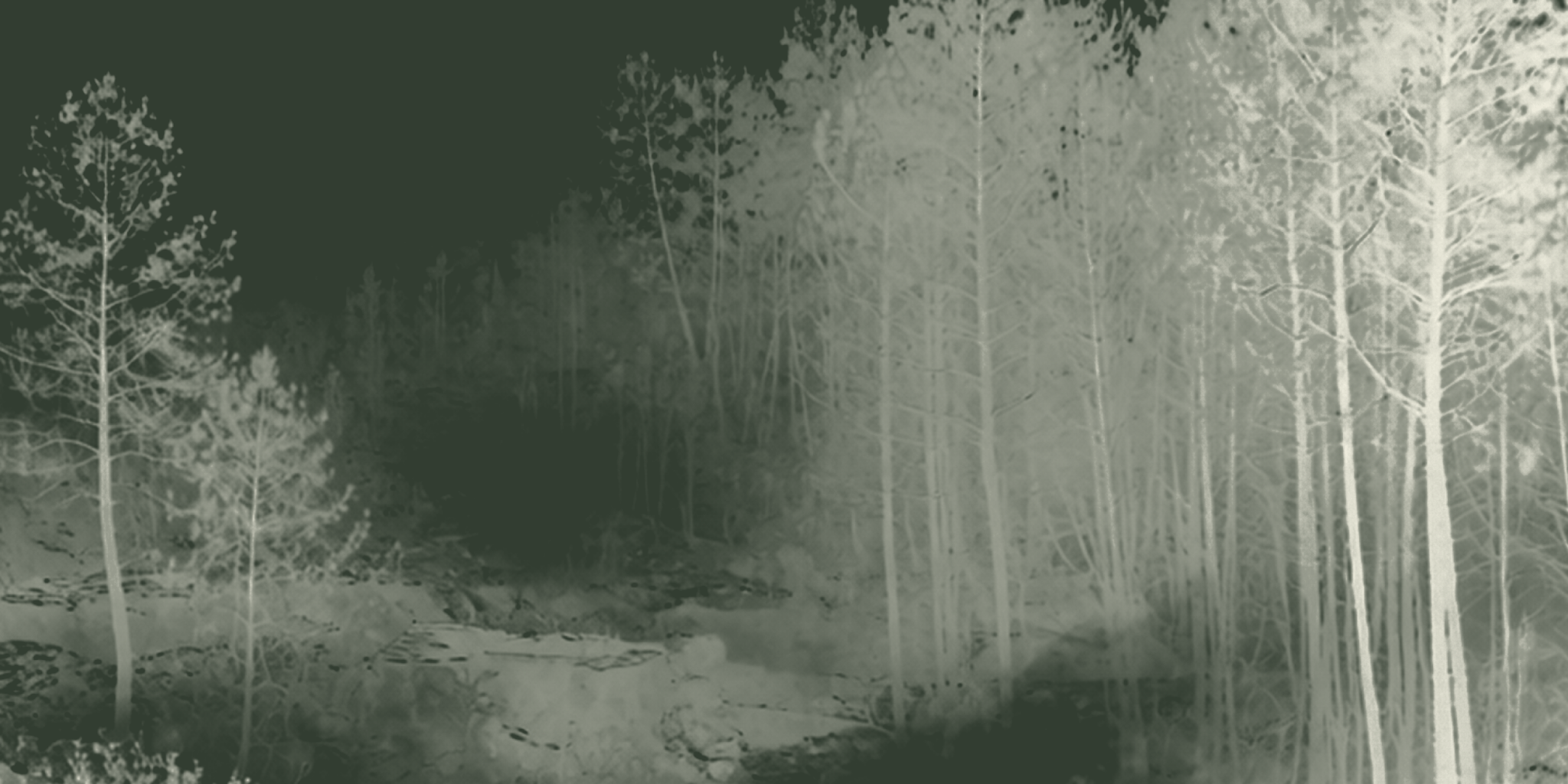
The mountain that has burned is not merely an object of contemplation. It is an event. Fire — with its incision, its violence and its ambiguity — introduces a radical discontinuity: it incinerates, obscures and reduces to ash, but it also exposes, reconfigures, returns to the surface and illuminates what lay buried. Smoke, charcoal, open soil, matter in suspension. And then, perhaps, the return: minimal grasses, unexpected hues, a slow breathing of the earth.
Within this interval — between devastation and regeneration — are inscribed impoverished territories, forgotten populations, interrupted ecosystems and displaced lives. The mountain thus becomes a field of tension in which catastrophe is not a theme but a critical condition — difficult, at times traumatic — that resists aestheticisation and summons an ethics of the gaze.
To look at and to see a burned mountain demands time, distance and risk. It demands accepting that the visible fails, that the landscape becomes opaque, that the world presents itself simultaneously as remainder and as possibility. It is at this point that MM* situates itself: not as a place of answers, but as a space in which ways of remaining attentive are questioned and tested.
2. Call for Proposals
Montanha Mágica* 2026 invites artists, researchers, architects, designers, filmmakers, curators, postgraduate students and other authors to submit proposals that do not merely represent the landscape but operate within it, traverse it, interrogate it and problematise it.
We seek practices that articulate creation and research, that work in the thickness of the territory and that take the landscape as an expanded field in which the aesthetic, the political, the ecological, the social and the sensible are interwoven.
We welcome artistic projects, artworks, exhibitions, residencies, papers, research-creation proposals, visual and filmic essays, cartographies, archives, editorial devices, installations, performances, drawing-based works, proposals arising from architecture and other forms of artistic or research practice, provided they are understood as ways of producing situated knowledge.
Submission by 30 June 2026 corresponds to the presentation of a proposal. The work, project, residency or paper is not assumed to be complete by that date. Selected proposals may be developed, produced, completed or formalised subsequently, in accordance with the Montanha Mágica* 2026 schedule and in coordination with the organisation.
Of particular interest is that which is made from place — not as a fixed identity but as a critical experience — as well as proposals that explore the contemporary instability of the landscape: its ambiguous and hybrid condition, its affective dimension, its inscription within the ecological and social crises of the present, and the multiple relations between territory, memory, infrastructure, ecologies in transformation and human and non-human agencies.
Between the local and the cosmopolitan, between the minimal gesture and the expanded intervention, the call remains deliberately open. It is not a matter of illustrating fire but of thinking with it; not of thematising catastrophe but of inhabiting it conceptually, refusing both pathos and neutralisation.
Montanha Mágica* seeks practices that accept the difficulty of the gaze, that operate in the friction between visible and invisible, between loss and possibility, between that which disappears and that which persists.
Particular value is given to proposals that work the landscape through processes of reading, inscription, documentation, mapping, counter-mapping and territorial recomposition, across different scales and temporalities, taking the territory as a field of relations, conflicts, memory and transformation.
Selected proposals will form part of the Montanha Mágica* 2026 programme, which may include a symposium, exhibitions, residencies, laboratories, interventions in the territory, public presentations and editorial projects. Accepted proposals may also give rise to scientific or artistic publications, subject to the later submission of a full text, critical documentation or appropriate editorial materials and the corresponding editorial assessment.
3. Sub-themes / Lines of Research and Creation
● The time of fire
Before, during and after: duration, rupture and persistence in the burned landscape
● Materials of combustion
Smoke, ash, charcoal, exposed soil: materialities, residues and traces
● Landscape in a state of catastrophe
Between destruction and possibility: catastrophe as a critical condition
● Regeneration and recomposition
Emergent ecologies, plant succession, slow temporalities
● Mountain: vulnerability and resistance
Extreme territories between ecological fragility and persistence
● Interrupted ecologies
Displacement of species, disappearance, reconfiguration of habitats
● Humans and non-humans
Relations, frictions and interdependencies in contexts of crisis
● Forgotten territories
Desertification, abandonment, impoverishment and marginality
● Community and memory
Lived experience, trauma, archive and transmission
● Landscape as inscription
A field of historical, cultural and political processes
● Situated artistic practices
Art as intervention, research and the production of knowledge
● Representation and the unrepresentable
The limits of the image in the face of devastation
● Aesthetics and ethics of the landscape
Between aestheticisation and responsibility
● Critical cartographies
Mapping, counter-mapping and the reading of the territory
● Scales of the landscape
From the local to the global: interdependencies and systems
● Architecture, infrastructure and territory
Construction, abandonment and reconfiguration of space
● Hybrid landscapes
Between natural and artificial, organic and technical
● Body, perception and experience
Dwelling, walking, looking, feeling
● Archive, documentation and testimony
Image, sound, narrative and memory of the landscape
● Art and ecological crisis
Contemporary practices in the face of the Anthropocene
● Symbiosis, cohabitation and relational ecologies
Multispecies relations, mutual dependence and forms of coexistence in the territory
● Drawing, painting and the moving image
Visual modes of reading, projection, inscription and imagination of the landscape
4. Schedule
The 2026 edition unfolds as a continuous process, distributed throughout the year, in which time is not merely chronology but working material.
In a first moment, the international call opens, convening proposals and outlining a provisional map of intentions. There follows the phase of selection and configuration of the projects, in which the field of relations that will sustain the programme begins to be drawn.
Between July and November, residencies, laboratories, artistic projects, research in the territory, production processes and the development of materials for exhibition, public presentation, archive or publication take place. This period constitutes the processual core of Montanha Mágica* 2026, where practices are developed, tested and transformed in contact with the mountain — with its surfaces, fractures, memories and forms of recomposition.
In the final months of the year, the production and formalisation of outcomes intensifies, culminating in the international symposium, to be held in Covilhã on 10 and 11 December 2026. This will be not merely a point of arrival but a moment of condensation: a place of sharing, confrontation, reflection and openness, from which the project re-inscribes itself within its own continuity.
Montanha Mágica* is not exhausted in the event. It extends as a structure, as an archive under construction, as a field where the landscape — even when burned — continues to demand that one learn to look.
Key Dates
Submission of proposals: by 30 June 2026
Announcement of the programme: 30 July 2026
Artistic residencies / projects / laboratories: July to November 2026
Delivery of final documentation, full texts or materials for exhibition, archive and possible publication: date to be announced following the acceptance of proposals
Meeting of the Scientific Committee: 9 December 2026
Expedition / visit to the Serra do Açor: 9 December 2026
Opening of the exhibitions: 10 December 2026
International symposium: 10 and 11 December 2026, Universidade da Beira Interior, Covilhã
5. Submission Guidelines
Proposals must be submitted by 30 June 2026 to the email address:
montanhamagica@ubi.pt
Proposals will be accepted in Portuguese, English, Spanish or French.
Submitting a proposal is free of charge. Registration fees, where applicable, will only be due after the proposal has been accepted and integrated into the programme.
Submissions must fall within one of the following categories:
I — Artistic projects, artworks, exhibitions or residencies
At this stage, a proposal dossier must be submitted; the delivery of a completed work, final visual documentation or definitive materials for publication is not required.
Proposals must include:
a) Name of the author or collective and corresponding affiliation, where applicable;
b) Contact details: email, telephone and address;
c) A brief biography of up to 1,000 characters and a personal photograph or an image representative of the collective;
d) Title of the artistic project, work, exhibition or residency;
e) A summary of the proposal of up to 2,000 characters;
f) A conceptual and methodological description of the proposal, indicating how it relates to the theme of this edition;
g) Status of the proposal: existing work, project in development, proposal to be produced, residency, research-creation or another format;
h) Preliminary technical information: format, media used, anticipated dimensions, spatial requirements, equipment, installation conditions or specific presentation conditions, where applicable;
i) Supporting visual documentation, where available: images of previous works, sketches, diagrams, reference images, process photographs, portfolio or links to visual documentation, video, sound or a web page;
j) Anticipated budget, where applicable;
k) An indication of any specific requirements for production, installation, transport, accommodation or technical support, where applicable.
Notes:
The visual documentation submitted at this stage is intended for the assessment of the proposal and need not correspond to final documentation of the work. In the case of an existing or completed work, the submission of available images or documentation is recommended, with no obligation as to definitive editorial format.
The indication of a budget or of technical, logistical or production requirements does not entail any automatic commitment to funding or support on the part of the organisation. These elements are intended for the assessment of the proposal’s feasibility and for the eventual definition of the conditions for integration into the programme.
Selected proposals may subsequently be accompanied by high-resolution final documentation, framing texts, technical sheets, images, videos, sounds or other materials required for exhibition, dissemination, archive or possible publication, by a date to be announced by the organisation. Where necessary for editorial purposes, high-resolution final visual documentation may be requested, preferably at 300 dpi.
II — Paper proposals
At this stage, only the paper proposal must be submitted. The delivery of a full article is not required at the moment of submission.
Paper proposals must include:
a) Name of the author and corresponding affiliation;
b) Contact details: email, telephone and address;
c) A brief biography of up to 1,000 characters and a personal photograph;
d) Title of the paper;
e) An abstract of up to 4,000 characters;
f) 3 to 5 keywords;
g) An indication of technical requirements for the presentation, where applicable.
Note:.
Accepted papers may subsequently be developed into a full article, to be submitted by a date to be announced by the organisation, for possible publication in Stellae Revista de Arte* or in a publication associated with Montanha Mágica* 2026, subject to editorial assessment and compliance with the applicable publication guidelines.
6. Final materials, full texts and publication
Acceptance of a proposal for presentation in the Montanha Mágica* 2026 programme does not automatically entail its publication.
Following the announcement of the programme, the organisation may invite the authors of selected papers, artistic projects, works, exhibitions, residencies, visual essays, cartographies, installations or other formats to submit full texts, critical documentation, final visual documentation or editorial materials for possible publication.
The full texts intended for publication must comply with the editorial guidelines to be announced by the organisation, including, where applicable:
a) A maximum length of 15,000 characters, including notes, bibliography and abstract;
b) Bibliographic references in APA format;
c) Images, captions and credits duly identified;
d) Authorisation to reproduce images or other materials subject to rights;
e) Compliance with the editorial deadlines subsequently defined.
The visual or audiovisual materials intended for dissemination, exhibition, archive or publication may include, where applicable:
a) High-resolution final images (600 ppi);
b) Process or installation photographs;
c) Technical sheet of the work, project, exhibition or residency;
d) An artistic or critical framing text;
e) Authorial, technical and institutional credits;
f) Links to video, sound, digital archive or supplementary documentation;
g) Reproduction authorisations, where necessary.
Publication will be subject to editorial assessment and to the suitability of the submitted materials to the editorial project of Stellae Revista de Arte* or of another publication associated with Montanha Mágica*.
7. Selection criteria
Proposals will be assessed by the Scientific and Artistic Committee of Montanha Mágica* 2026, taking the following criteria into account:
a) Conceptual relevance to the theme The Mountain in Flames: the Time of Fire;
b) The artistic, scientific or investigative quality of the proposal;
c) A critical relationship with landscape, territory, memory, ecology or situated experience;
d) Suitability to the research-creation lines of the 2026 edition;
e) Technical, financial, logistical and temporal feasibility;
f) Relevance to the overall Montanha Mágica* programme, including symposium, exhibitions, residencies, laboratories, interventions, archive or publications.
Acceptance of a proposal may entail curatorial, technical, logistical or editorial adjustments, to be agreed between the organisation and the selected authors.
8. Registration
Registration is mandatory for all participants who present a paper, form part of the official programme or wish to obtain a digital certificate and event documentation.
Attendance at the sessions is free for the community of the Universidade da Beira Interior and for the general public, whenever neither documentation nor a digital certificate is required.
For registration purposes, an accepted proposal is understood to be any proposal selected by the organisation, including a paper, artistic project, work, residency, exhibition, visual or filmic essay, cartography, installation, editorial device or other format integrated into the Montanha Mágica* 2026 programme.
The fees are not cumulative. Participants pay only the amount corresponding to their category. Thus, an external author or participant with an accepted proposal pays only the €100 fee, with no further charge for the issuing of a certificate or documentation.
In the case of proposals signed by two or more authors, only the first author or the person responsible for the public presentation need complete registration and pay the corresponding fee. The remaining authors may attend free of charge, except where they wish to obtain an individual digital certificate or their own documentation.
Registration must be completed after the proposal has been accepted, within a period to be announced by the organisation, by sending an email to:
montanhamagica@ubi.pt
with the following details:
- Full name;
- Institution or affiliation;
- Profession, occupation or course attended;
- Title of the paper or project, where applicable;
- Contact email;
- Adress;
- Tax identification number (VAT) for receipt purposes;
- Proof of bank transfer, where applicable.
The organisation may request free registration from participants without an accepted paper or proposal, solely for reasons of logistics, capacity or the issuing of internal documentation.
9. Payment details
Bank transfer, payable to the Universidade da Beira Interior:
Name: UNIVERSIDADE BEIRA INTERIOR
Account: 0270021357230 – EUR – RP Diversas
IBAN: PT50 0035 0270 00021357230 64
BIC SWIFT: CGDIPTPL
Proof of payment must be sent to:
montanhamagica@ubi.pt
10. Copyright, reproduction and dissemination
The submission of images, works, texts or other materials entails the granting of a non-exclusive, free of charge and limited authorisation for the dissemination, documentation, public communication and publication within the scope of Montanha Mágica*, of Stellae Revista de Arte* and the institutional channels of the Universidade da Beira Interior.
This authorisation is intended solely for the dissemination, memory, archiving, communication and publication of the activities associated with Montanha Mágica* 2026, always with identification of the authors.
The authors retain their copyright in full.
Whenever the submitted materials include images, sounds, texts, works, recordings or other content subject to third-party rights, it is the authors’ responsibility to secure the corresponding authorisations for use, reproduction and dissemination within the scope of the project.
11. Organization
SCIENTIFIC AND ARTISTIC COORDINATION
Francisco Paiva
João Sequeira
SCIENTIFIC COMMITTEE
Adriana Veríssimo Serrão, Universidade de Lisboa PT
Ana Leonor Madeira Rodrigues, Universidade de Lisboa PT
Ana Margarida Ferreira, Universidade da Beira Interior
Anđelka Bnin-Bninski, University of Belgrade, Serbia
António José Santos Meireles, Instituto Politécnico de Bragança PT
Carmen Bellido Márquez, Universidad de Granada ES
Carmen Marín Ruiz, Madrid Grupo Humanidades Ambientales ES
Eduardo Paz Barroso, Universidade Fernando Pessoa PT
Fernando Garcia-Dory, inland – art, agriculture & territory ES
Francisco Paiva, Universidade da Beira Interior PT
Hélène Saule-Sorbé, Université Bordeaux 3 FR
Jesús Osório, FBA Universidad de Granada ES
João Meneses de Sequeira, Universidade da Beira Interior PT
João Paulo de Araújo Queiroz, Universidade de Lisboa PT
Josu Rekalde Izagirre, Universidade do País Basco ES
Juan Guardiola Román, Centro de Arte y Naturaleza, Huesca, ES
Lea Holst Laursen, Aalborg University, Denmark
Lluís Ortega, Universitat Politècnica de Catalunya ES
Manuela Penafria, Universidade da Beira Interior PT
Manuela Pires da Fonseca, A Ribeira a Gostar dela Própria PT
Maria do Carmo Mendes, Universidade da Beira Interior PT
Miguel Bandeira Duarte, Universidade do Minho PT
Paloma Villalobos, Universidad Complutense de Madrid ES / Universidad de Chile CL
Paulo Luís Almeida, Universidade do Porto PT
Paulo Manuel Ferreira da Cunha, Universidade da Beira Interior PT
Paulo Oliveira Freire Almeida, Universidade do Minho PT
Rita Salvado, Universidade da Beira Interior PT
Rita Sixto Cesteros, Universidad del País Vasco ES
Roberto Cavallo, Technical University of Delft, Netherlands
Roberto Ramos de Léon, CDAN – Centro de Arte y Naturaleza – Huesca, ES
Tadeja Zupančič, University of Ljubljana, Slovenia
Tania de León Yong, Universidad Nacional Autónoma de México, MX / KHM Germany
Tiago Fernandes, Instituto Politécnico de Bragança PT
Txemi García Mediero, Universidad del País Vasco ES
Unai Requejo, Universidad do País Basco ES
Urbano Mestre Sidoncha, Universidade da Beira Interior PT
Urs Hirschberg, Graz University of Technology, Austria
Veva Linaza Vivanco, Universidad del País Vasco ES
12. Partnerships
ARENA Architectural Research European Network
COOLABORA – Intervenção Social
École Supérieure d’art d’Aix-en-Provence, France
Facultad de Bellas Artes de la Universidad del Pais Vasco, Bilbau, Espanha
Film Studies courses, 1st and 2nd Cycle, UBI
Multimedia Design courses, 1st and 2nd Cycle, UBI
Museu de Lanifícios da Universidade da Beira Interior
PhD in Design, Universidade da Beira Interior
13. Support
Universidade da Beira Interior
Fundação para a Ciência e a Tecnologia
Câmara Municipal da Covilhã
Águas da Covilhã, EM
Museu de Lanifícios da Universidade da Beira Interior
14. Contacts
Montanha Mágica* Art and Landscape, 5th ed.
iA* Research in the Arts
(UID/06428/2025)
iA* Lab PArTE — Landscape, Heritage, Art, Territory and Ecology
Universidade da Beira Interior
Faculdade de Artes e Letras / Departamento de Artes
Rua Marquês D´Ávila e Bolama
6201-001 Covilhã, Portugal
E-mail: montanhamagica@ubi.pt
Website: montanhamagica.ubi.pt
© Francisco Paiva / João Sequeira
MM* 2026







Funding